

Many women only think about seeing a doctor when something feels wrong. A lingering cough, unexpected pain, fatigue, or a prescription refill may prompt an appointment. But primary care for women is about much more than responding to symptoms. It creates an ongoing partnership focused on prevention, early detection, everyday health needs, and long-term wellness.
At every stage of life, women’s health can be influenced by changing hormones, reproductive goals, family history, stress, work, caregiving responsibilities, and chronic health conditions. Having a trusted primary care provider means you have one place to discuss the full picture of your health, not just one concern at a time.
For women in McKinney, establishing care with a provider who understands women’s health can make it easier to stay proactive. It also creates a foundation of care that can adapt as your needs change over time.
Primary Care Is Your Health Home
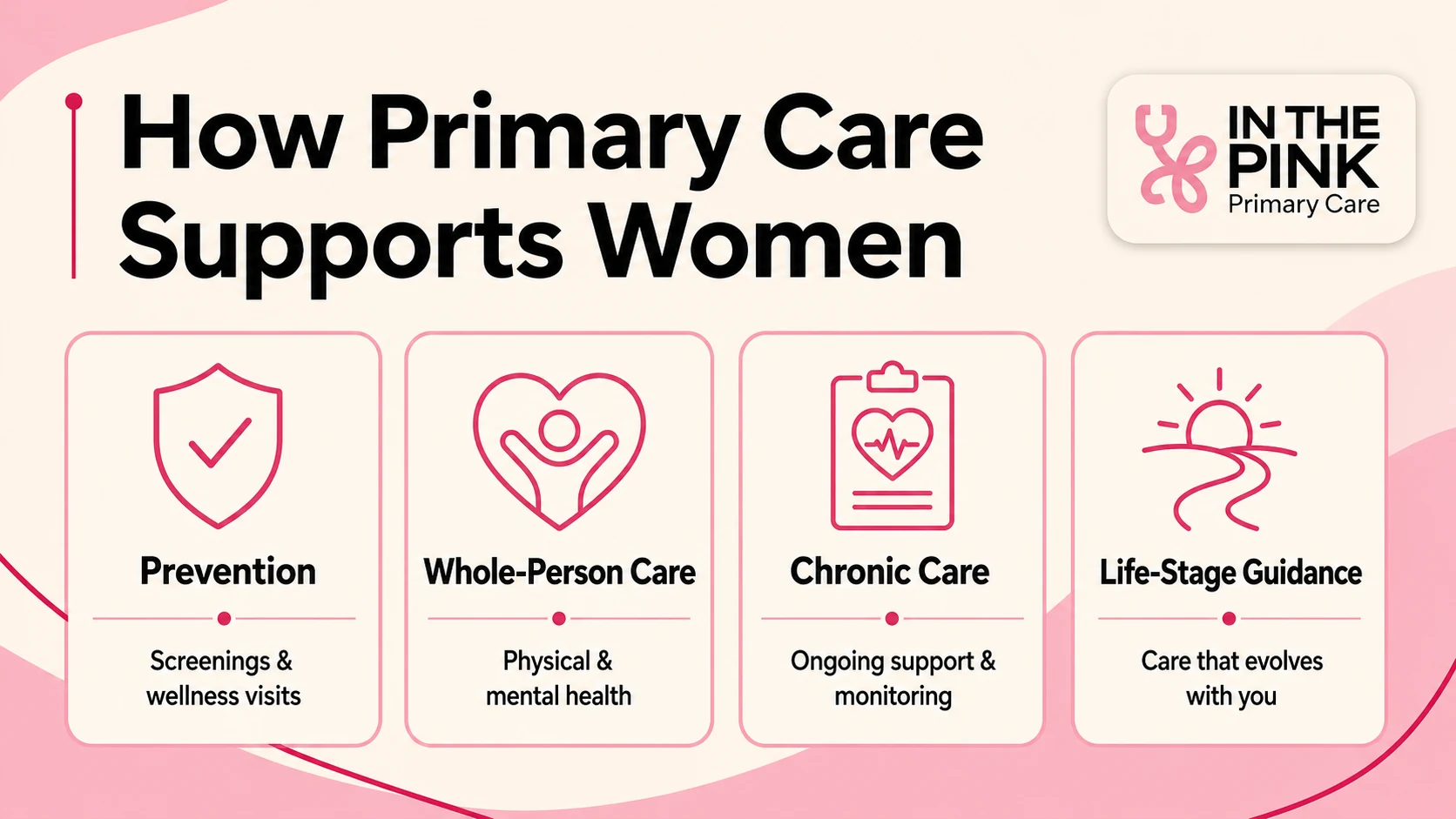
A primary care provider is often the first person you call for a new health concern, but the role goes much further. Primary care includes annual wellness visits, preventive screenings, medication management, routine lab work, acute illness care, chronic-condition support, and referrals to specialists when needed.
For women, these appointments may include conversations about menstrual changes, sleep, mood, stress, sexual health, weight changes, menopause, family history, pregnancy planning, blood pressure, cholesterol, or diabetes risk. These issues do not exist in isolation. They can affect one another, which is why a whole-person approach matters.
Primary care also helps prevent the frustration of fragmented healthcare. When different providers only see one small piece of your health history, important patterns can be harder to identify. A women’s primary care doctor can help connect the dots, review your overall health goals, and coordinate care when an OB-GYN, cardiologist, endocrinologist, therapist, or other specialist is involved.
At In The Pink Primary Care, women can access comprehensive primary care designed around their unique needs, life stages, and long-term wellbeing.
Ready to Take Control of Your Health?
Schedule a personalized consultation with In The Pink Primary Care. We provide compassionate, comprehensive care designed around your unique health needs.
Schedule Your AppointmentPrevention Is One of the Most Important Benefits of Primary Care for Women
Preventive care is not simply a once-a-year appointment that you check off a list. It is an opportunity to discuss what is changing in your life and what steps may support your health in the future. A well-woman preventive visit may include screening, counseling, immunizations, and health-risk assessment based on your age, medical history, and personal circumstances. ACOG’s well-woman guidance emphasizes that preventive care should be personalized rather than treated as identical for every patient.
A regular primary care relationship makes it easier to track important health information over time. Your provider may notice a gradual rise in blood pressure, a change in cholesterol, persistent fatigue, changes in weight, or a pattern in symptoms that deserves a closer look. These patterns can be difficult to recognize during one-off urgent visits.
Preventive care is also a place to talk about health topics that may not feel urgent but still matter. This may include sleep quality, nutrition, physical activity, stress, mental health, alcohol use, family history, or questions about medications and supplements. These conversations can help you make realistic changes before a problem becomes more difficult to manage.
If you are looking for women’s preventive care in McKinney, explore Preventive Medicine at In The Pink Primary Care. A personalized visit can help you understand which preventive services are appropriate for you now and what to plan for next.
Women’s Health Needs Change Throughout Life
Primary care for women should evolve with you. The care you need in your twenties may look different from what you need during pregnancy planning, after childbirth, in midlife, or after menopause.
During younger adulthood, women may want to discuss birth control, menstrual symptoms, sexual health, anxiety, nutrition, and preventive screenings. In the reproductive years, family planning, fertility goals, pregnancy preparation, and postpartum recovery may become part of the conversation. Later, many women need support with perimenopause or menopause symptoms, bone health, heart health, sleep changes, and changes in metabolism.
The goal is not to treat every life stage as a problem. It is to ensure that you have a provider who listens, answers questions clearly, and helps you understand what is normal for you and what needs medical attention.
Family planning is an important example. It may involve contraception, preconception counseling, pregnancy goals, or simply discussing your options for the future. These conversations are personal, and they should be handled with respect and without pressure. Family Planning services can help women make informed decisions based on their health, lifestyle, and goals.
Chronic Conditions Often Need a Women-Centered Approach
Women may experience chronic conditions differently, and many health concerns affect multiple areas of life. For example, diabetes, high blood pressure, thyroid concerns, migraines, autoimmune conditions, anxiety, and depression can all influence energy, sleep, weight, mood, reproductive health, and daily functioning.
One of the key benefits of a women’s primary care doctor is continuity. Rather than treating every appointment as separate, your provider can monitor your condition over time, review how medications are working, help you set realistic health goals, and make adjustments when your needs change.
Chronic-condition management is not only about prescriptions or lab results. It should also include education, lifestyle support, follow-up, and a plan you can realistically maintain. The right plan takes your work schedule, family responsibilities, stress level, access to care, and personal preferences into account.
For ongoing support with conditions such as diabetes, hypertension, thyroid issues, high cholesterol, or other long-term health concerns, Chronic Illness Management can provide personalized care and regular follow-up.
Why Many Women Prefer a Female Primary Care Physician
Every patient deserves respectful, high-quality care, regardless of their provider’s gender. However, many women feel more comfortable seeing a female primary care physician for personal health concerns. This may be especially true when discussing periods, sexual health, urinary symptoms, pregnancy planning, postpartum concerns, menopause, or changes in mood.
Comfort matters because open communication matters. When you feel safe discussing symptoms or asking questions, your provider has a clearer picture of your health. You are also more likely to bring up concerns early rather than waiting until they become more serious.
If you are searching for a “female doctor McKinney TX,” consider more than the provider’s gender. Look for a practice that values listening, shared decision-making, clear communication, and evidence-based care. A good provider should make space for your questions and help you understand your options without making you feel rushed.
Choosing a Primary Care Doctor for Women
Choosing a primary care doctor for women is a personal decision. The right provider should be qualified, accessible, and someone you feel comfortable seeing regularly. Before scheduling, consider whether the practice offers preventive care, chronic disease management, acute care, family planning support, and convenient follow-up options.
It is also helpful to ask how the practice handles referrals, lab results, medication renewals, urgent concerns, and communication between appointments. Some women need in-person care frequently, while others benefit from a mix of office visits and virtual care.
Telemedicine can be particularly helpful for follow-up appointments, medication discussions, minor concerns, and some preventive-care conversations. It does not replace every type of visit, but it can make care more accessible when travel, work, childcare, or illness make an office visit difficult. Telemedicine Services offer a convenient way to stay connected with your provider when virtual care is appropriate.
Do Not Wait Until You Feel Unwell
Primary care gives women a practical way to stay involved in their own health. You do not need to have a serious symptom or chronic diagnosis to make an appointment. A routine visit can be the right time to discuss prevention, changes in your health, family history, emotional wellbeing, or questions you have been putting off.
Women are often balancing careers, caregiving, household responsibilities, and everyone else’s appointments. Your health deserves a place on that list, too. Routine care can help you feel more informed, supported, and prepared for the years ahead.
If you are ready to establish care with a women-focused provider in McKinney, contact In The Pink Primary Care to schedule a visit.
Ready to Take Control of Your Health?
Schedule a personalized consultation with In The Pink Primary Care. We provide compassionate, comprehensive care designed around your unique health needs.
Schedule Your AppointmentFrequently Asked Questions
Primary care for women can include preventive visits, routine screenings, medication management, lab work, acute illness care, chronic-condition management, mental health discussions, family planning, and referrals when specialized care is needed. Your care plan should be based on your age, health history, symptoms, and goals.
Many women benefit from a preventive visit at least once a year, but the right schedule varies. You may need more frequent appointments if you have a chronic condition, new symptoms, medication changes, pregnancy-related needs, or concerns that require follow-up.
Yes. An OB-GYN focuses on reproductive and gynecological health, while a women-only primary care practice can support broader health needs, including preventive care, chronic conditions, acute illnesses, medication management, and overall wellness. Depending on your needs, your primary care provider may also coordinate care with an OB-GYN.
Yes. A female primary care physician can discuss symptoms such as hot flashes, sleep changes, mood changes, irregular periods, and other concerns related to perimenopause or menopause. Your provider can help determine next steps and refer you to a specialist if needed.
Contact a provider when you have new, persistent, or concerning symptoms; need medication support; want to schedule preventive care; or have questions about your health. For severe symptoms or a medical emergency, call 911 or seek emergency care immediately.