High Blood Pressure in Women: Preparing for a Primary Care Visit
You check your blood pressure at home and notice it’s higher than usual. Maybe it happened during a stressful morning, or perhaps you’ve been seeing similar numbers for several days. Now you’re wondering whether you should schedule a doctor’s appointment.
It’s a question many women face, especially because high blood pressure often develops without noticeable symptoms.
The good news is that you don’t have to arrive at your appointment with all the answers. Bringing a few days of blood pressure readings, your medication list, and questions about your health can help your provider understand what’s happening.
If you’re concerned about high blood pressure in women, here’s what to track before your next primary care visit and how to prepare for a productive conversation.
Why High Blood Pressure in Women Deserves Attention
High blood pressure, also called hypertension, occurs when the force of blood against your artery walls remains higher than recommended.
Over time, uncontrolled hypertension can increase the risk of heart disease, stroke, kidney disease, and other complications.
One challenge is that high blood pressure usually doesn’t cause noticeable symptoms. You may feel perfectly fine even when your readings are consistently elevated.
Women also experience certain health changes that can influence blood pressure, including pregnancy-related conditions and hormonal changes during menopause.
At In The Pink Primary Care, preventive healthcare focuses on helping women understand their individual health risks and make informed decisions about ongoing care.
What Do Your Blood Pressure Numbers Mean?
A blood pressure reading contains two numbers.
The systolic pressure, or top number, measures pressure when your heart beats.
The diastolic pressure, or bottom number, measures pressure when your heart relaxes between beats.
For nonpregnant adults, the American Heart Association classifies blood pressure as follows:
| Category | Blood Pressure Reading |
|---|---|
| Normal | Below 120/80 mm Hg |
| Elevated | 120–129 systolic and below 80 diastolic |
| Stage 1 hypertension | 130–139 systolic or 80–89 diastolic |
| Stage 2 hypertension | 140 or higher systolic or 90 or higher diastolic |
If the two numbers fall into different categories, the higher category generally applies.
A single elevated reading doesn’t necessarily mean you have hypertension. Your provider usually considers repeated measurements, your medical history, and other health factors before confirming a diagnosis.
These categories also do not replace pregnancy-specific blood pressure guidance.
How to Check Blood Pressure Correctly at Home
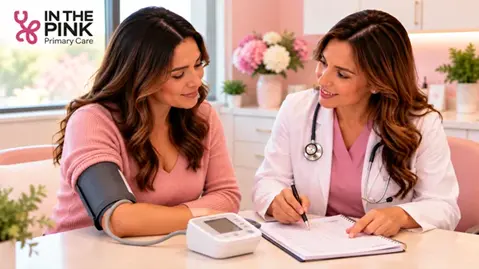
Taking accurate blood pressure readings at home can make your appointment more useful.
The American Heart Association recommends using a validated automatic upper-arm blood pressure monitor with a cuff that fits properly.
Wrist and finger monitors are generally less reliable.
For accurate readings:
- Avoid smoking, caffeine, and exercise for at least 30 minutes before measuring.
- Empty your bladder and sit quietly for five minutes.
- Keep your back supported and both feet flat on the floor.
- Rest your arm on a surface at heart level.
- Place the cuff directly on bare skin, not over clothing.
- Take two readings one minute apart and record both results.
Try to measure at consistent times, such as morning and evening, if your healthcare provider recommends that schedule.
Don’t talk or use your phone while the monitor is taking a reading.
Bring your monitor to your next appointment so your provider can check the cuff fit, technique, and accuracy.
What Should You Include in a Home Blood Pressure Log?
A home blood pressure log helps your healthcare provider identify patterns that might not appear during a single office visit.
Instead of writing down only unusually high readings, record your measurements consistently.
Include:
- Date and time
- Systolic and diastolic readings
- Heart rate, if available
- Medication timing
- Any relevant symptoms
- Notes about unusual circumstances
For example, your log might look like this:
| Date | Time | Blood Pressure | Notes |
|---|---|---|---|
| Monday | 8:00 AM | 132/84 | Before breakfast |
| Monday | 7:30 PM | 128/82 | After resting |
| Tuesday | 8:00 AM | 135/86 | Before medication |
These are illustrative readings, not a diagnosis or recommended treatment target.
Ask your provider how many days of measurements to collect. Many clinicians request several days of morning and evening readings before making treatment decisions.
Consistent records can help distinguish occasional increases from an ongoing blood pressure concern.
What Else Should You Track Before Your Appointment?
Blood pressure numbers are important, but they aren’t the entire picture.
Your Current Medications
Bring a list of prescription medications, over-the-counter products, vitamins, and supplements.
Some products, including certain decongestants and pain relievers, can affect blood pressure.
If you already take blood pressure medication, note any missed doses or side effects.
Symptoms or Changes in Your Health
Write down any new headaches, dizziness, swelling, or other concerns.
Remember that most people with hypertension have no symptoms, so feeling normal doesn’t necessarily mean your blood pressure is controlled.
Family and Medical History
Tell your provider about close relatives with hypertension, heart disease, or stroke.
Also mention a history of diabetes, kidney disease, or pregnancy-related high blood pressure.
Your Daily Habits
Be prepared to discuss sleep, physical activity, nutrition, alcohol consumption, tobacco use, and stress.
These details help your provider understand possible contributors to elevated blood pressure.
In The Pink Primary Care offers primary care services for women that include preventive evaluations and management of ongoing health concerns.
How Does Hypertension Affect Women Differently?
Although hypertension can affect anyone, certain reproductive and hormonal factors deserve additional attention in women’s healthcare.
Pregnancy and Postpartum Health
High blood pressure during pregnancy requires special monitoring because it may be associated with conditions such as gestational hypertension or preeclampsia.
Women with a history of these conditions also have an increased risk of cardiovascular problems later in life.
If you’re pregnant or recently delivered, discuss elevated readings promptly with your obstetric care team. A reading of 160/110 mm Hg or higher during pregnancy is considered severe and requires prompt assessment.
Menopause and Blood Pressure
As women age, hormonal changes, changes in body composition, and other cardiovascular risk factors can influence blood pressure.
It’s helpful to discuss new or changing readings during midlife and after menopause rather than assuming they’re simply part of getting older.
Other Health Conditions
Diabetes, kidney disease, sleep apnea, and certain hormonal disorders can affect blood pressure management.
Your provider may consider these conditions when recommending tests or treatment.
You can learn more about Dr. Randa Soukieh and the practice to understand In The Pink Primary Care’s approach to women’s healthcare in McKinney.
What Happens During a Blood Pressure Follow-Up Appointment?
A blood pressure follow-up appointment gives your provider an opportunity to review your readings and determine whether further evaluation is needed.
During the visit, your provider may:
- Measure your blood pressure using proper technique
- Review your home blood pressure log
- Discuss medications and possible side effects
- Evaluate lifestyle and cardiovascular risk factors
- Recommend laboratory testing when appropriate
- Discuss lifestyle changes or medication adjustments
- Establish a follow-up monitoring schedule
Depending on your medical history, testing may include kidney function, electrolytes, blood glucose, or cholesterol measurements.
Not everyone needs every test. Your provider can explain which evaluations are relevant to your situation.
For additional information about laboratory testing, read the practice’s guide to annual blood tests for women.
When Is High Blood Pressure an Emergency?
Most routine blood pressure concerns can be discussed through a scheduled medical appointment. However, severely elevated readings require immediate attention.
For nonpregnant adults, if your blood pressure is higher than 180 systolic and/or 120 diastolic, wait at least one minute and measure it again.
If it remains that high, contact a healthcare professional immediately, even if you have no symptoms.
Call 911 if severely elevated blood pressure occurs with chest pain, difficulty breathing, weakness, numbness, vision changes, trouble speaking, or other symptoms suggesting an emergency.
Do not delay emergency care to collect additional readings.
Pregnant or recently postpartum women may require urgent assessment at lower blood pressure levels, particularly with severe headache, vision changes, upper abdominal pain, or difficulty breathing.
Primary Care for High Blood Pressure in McKinney, TX
Managing hypertension often requires more than one appointment.
Regular follow-up helps your provider review progress, assess treatment effectiveness, and make adjustments based on your individual needs.
In The Pink Primary Care is a women-only medical practice in McKinney, Texas, led by board-certified family medicine physician Dr. Randa Soukieh.
For women seeking hypertension care in McKinney, the practice offers preventive healthcare and ongoing primary care support.
Before scheduling, you can review the practice’s insurance information and confirm coverage for your visit, medications, and recommended testing.
Frequently Asked Questions
1. How many days should I track my blood pressure before seeing a doctor?
Your provider may recommend recording morning and evening readings for several days, often around one week. Follow the specific schedule provided by your healthcare team.
2. Is 130/80 considered high blood pressure for women?
For most nonpregnant adults, a consistent reading of 130/80 mm Hg falls within the Stage 1 hypertension category. A diagnosis generally requires appropriate repeated measurements and clinical evaluation.
3. Can stress cause high blood pressure readings?
Yes. Stress can temporarily raise blood pressure. However, repeated elevated readings shouldn’t automatically be attributed to stress without medical evaluation.
4. Should I take my blood pressure medication before my appointment?
Continue taking prescribed medication as directed unless your healthcare provider gives different instructions. Don’t skip or change doses simply to influence the readings taken during your appointment.
5. Can menopause increase the risk of hypertension?
Blood pressure often rises with age, and menopause-related changes may contribute to cardiovascular risk. Regular monitoring can help identify changes that deserve attention.
6. Can high blood pressure improve with lifestyle changes?
For some people, reducing sodium intake, following a heart-healthy eating pattern, staying active, limiting alcohol, and managing weight can lower blood pressure. Others also need medication.
7. Where can I schedule a blood pressure check in McKinney?
In The Pink Primary Care offers women’s preventive and ongoing primary care services in McKinney. You can review the practice’s frequently asked questions and contact the office about appointment availability.
Take the Next Step Toward Better Blood Pressure Management
Preparing for your appointment doesn’t require complicated medical knowledge.
A reliable home blood pressure log, an updated medication list, and a few questions about your health can help make your visit more productive.
Whether you’ve recently noticed elevated readings or already manage hypertension, regular monitoring and individualized care can support your long-term health.
For women seeking primary care for high blood pressure in McKinney, In The Pink Primary Care provides personalized medical support.
Explore more women’s health information on the In The Pink Primary Care blog, or contact the practice to discuss scheduling.
Call (469) 406-1161 to arrange a primary care appointment.
Your blood pressure readings are valuable information. Bringing them to your visit is a practical first step toward understanding and managing your health.