
Choosing birth control can feel like a big decision because it touches more than pregnancy prevention. It can relate to your comfort, periods, relationships, future plans, and health. With many options available, questions are normal. The goal is not one method for everyone; it is an option that is safe, practical, and right for you.
At In The Pink Primary Care, family planning is private, thoughtful, and centered on your preferences. Whether you are considering birth control for the first time, changing methods because of side effects, or planning for the future, our Family Planning services can help you understand your choices and decide with confidence.
Because your needs can evolve, it is useful to revisit the conversation whenever your health, relationships, routine, or pregnancy plans change. Updating your plan is a normal part of ongoing care, too.
Birth Control Is a Personal Health Decision
Birth control comes in categories, but the choice is always personal. One woman may want a method she can begin and stop easily. Another may prefer a long-acting option so she does not have to remember it every day. Someone else may want support for heavy, painful, or irregular periods while also preventing pregnancy. Your health history, medications, lifestyle, and plans for pregnancy all belong in the conversation.
It also helps to define what convenience means in your life. A daily pill may work with a steady routine, while a patch, ring, shot, implant, or IUD may suit someone who prefers fewer reminders. A clinician can turn a long list of choices into a clear plan. A Well-Woman Exam is a good time to discuss contraception, menstrual changes, and reproductive goals.
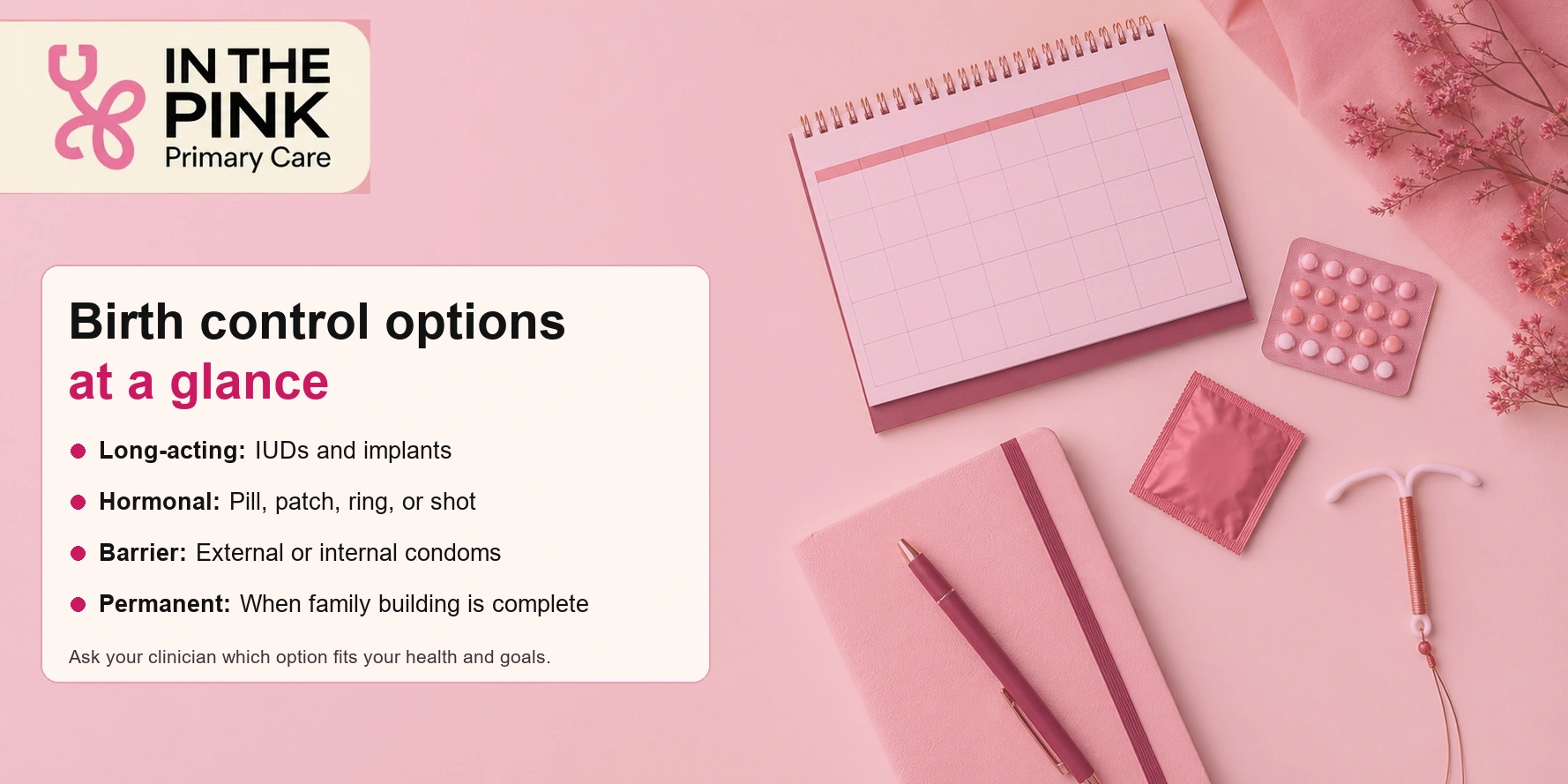
Long-Acting Options: IUDs and Implants
Long-acting reversible contraception includes intrauterine devices, or IUDs, and the birth control implant. These methods provide ongoing pregnancy prevention without a daily task. An IUD is placed in the uterus by a trained healthcare professional. Some release a hormone, while a copper IUD does not. The implant is a small rod placed beneath the skin of the upper arm that releases a progestin hormone.
Many women value these methods because they are low maintenance and reversible. A clinician can remove them if your plans change. Your provider should explain placement, bleeding changes, side effects, and follow-up. Ask questions and choose a method you understand and feel comfortable with.
Hormonal Methods: The Pill, Patch, Ring, and Shot
Hormonal birth control includes options that work on different schedules. The pill is taken by mouth, usually every day. The patch is worn on the skin and changed on a schedule. The vaginal ring is used according to product instructions. The shot is given at intervals by a healthcare professional or, for certain products, by self-injection after appropriate teaching.
Some women choose hormonal methods for more predictable bleeding or relief from some menstrual symptoms. A method that fits one person may not suit another. Health conditions, medications, migraine patterns, tobacco use, blood-pressure concerns, breastfeeding, and postpartum timing can affect the recommendation. A personalized health review is more reliable than a friend’s experience or social-media advice.
Ready to Take Control of Your Health?
Schedule a personalized consultation with In The Pink Primary Care. We provide compassionate, comprehensive care designed around your unique health needs.
Schedule Your AppointmentBarrier Methods and STI Protection
Barrier methods help prevent sperm from reaching an egg. External and internal condoms can be used alone or with another method. Using condoms with another contraceptive can help prevent pregnancy while reducing the risk of sexually transmitted infections, or STIs.
Most hormonal methods, IUDs, and implants do not protect against STIs. For prevention, testing, symptoms, or possible exposure, speak with your clinician. Acute Illness Managemen can guide the next step and help you get timely care.
Other Approaches to Family Planning
Fertility-awareness methods track menstrual-cycle changes to identify days when pregnancy is more likely. They may suit people who prefer a non-hormonal approach, but they require education, consistent observation, and careful use. Effectiveness varies by method and consistency. A clinician can help you decide whether this approach matches your goals and cycle patterns.
Permanent contraception may be considered by people who are certain they do not want future pregnancies. Options include tubal surgery for women or vasectomy for a partner. Because these choices are intended to be permanent, they deserve time, clear information, and freedom from pressure.
Emergency Contraception: Act Promptly When Needed
Emergency contraception can be used after sex without contraception or when a method fails, such as a broken condom. It is not a replacement for routine birth control, but it can be important when pregnancy prevention is needed afterward. Options have different timing requirements, and some are available over the counter while others require a prescription or clinical visit.
If you think you may need emergency contraception, reach out promptly. If an office visit is difficult, Telemedicine Services may be a helpful place to start when clinically appropriate. A clinician can discuss timing, medication interactions, and ongoing contraception.
Your History Helps Shape the Right Option
Birth control should include your whole health picture. Your clinician may ask about blood pressure, migraines, past blood clots, menstrual symptoms, medicines, smoking or vaping, recent pregnancy, breastfeeding, and personal or family health history. These details help your clinician recommend safe options.
Reproductive health is connected to the rest of your well-being. Menstrual changes can sometimes relate to stress, thyroid concerns, anemia, medication effects, or other issues. Through Preventive Medicin, women can address screenings, health risks, and ongoing concerns in whole-person care.
What Happens During a Family-Planning Appointment?
A family-planning visit should feel like a conversation, not a test. Your clinician will ask about your goals, cycle, health history, medications, past experience with birth control, and concerns about side effects. The visit may include a blood-pressure check, pregnancy test, or STI testing. Most prescriptions do not require a pelvic exam, although an IUD, diaphragm, or cervical cap may require an exam or in-person fitting.
Come prepared with questions. Mention changes in mood, headaches, heavy bleeding, pain, missed periods, or past side effects. Share your pregnancy timeline even if it is uncertain. You do not have to decide that day. Good care gives you room to choose at a comfortable pace.
Family Planning Supports Long-Term Health
Family planning is one part of primary care, but it can affect daily life and long-term wellness. A plan that matches your needs can help you feel more in control of your health, education or career goals, relationships, and future. It can also address period symptoms, pregnancy spacing, postpartum planning, or changing reproductive goals.
A trusted primary-care relationship matters because the same clinician can coordinate preventive screenings, chronic-condition care, mental-health concerns, and referrals. This continuity is central to how women’s primary care supports long-term health and prevention. Reproductive health should not be separate from the rest of your care.
Personalized Birth Control Care in McKinney
The right birth control method fits your health, values, and life right now. It may change over time. A method that worked years ago may no longer match your routine, symptoms, relationship, or pregnancy plans. Regular check-ins let you revisit your choice without judgment.
In The Pink Primary Care offers personalized women’s healthcare in McKinney. If you are ready to discuss options, change your method, or plan for a future pregnancy, schedule a family-planning appointment. We are here to listen, answer questions, and help you make an informed choice.
Ready to Take Control of Your Health?
Schedule a personalized consultation with In The Pink Primary Care. We provide compassionate, comprehensive care designed around your unique health needs.
Schedule Your AppointmentFrequently Asked Questions
There is no single best method for every woman. The best choice depends on your health history, pregnancy-prevention needs, preference for a daily or long-acting method, period symptoms, comfort with hormones, and need for STI protection. A family-planning appointment can compare options for your needs.
No. Pills, patches, rings, shots, implants, and IUDs do not protect against STIs. External and internal condoms can help reduce STI risk when used correctly and consistently. Many people use condoms with another method for pregnancy prevention and STI protection.
Some hormonal methods may help with heavy bleeding, painful cramps, or irregular cycles. The right option depends on your symptoms and health history. If periods change suddenly, become very heavy, or cause significant pain, speak with a clinician so other causes can be considered.
Act promptly and contact a healthcare professional or pharmacist. The next step depends on your method, when the problem occurred, and whether emergency contraception may be appropriate. Do not wait for symptoms or a missed period.
Not usually. Most prescriptions do not require a pelvic exam. An exam may be needed for an IUD, diaphragm, cervical cap, or concerning symptoms. Your clinician can explain what is needed and why before proceeding.